Shoe Storage Organization Systems: Smart Space Guide
Keeping shoes organized can feel like a never-ending task. From everyday sneakers to seasonal boots, footwear tends to pile up quickly. The good news is that with the right shoe storage solutions, you can transform clutter into a clean and functional space.
This guide walks you through practical and stylish ways to manage your footwear. Whether you're working with a small entryway or a spacious closet, there are simple strategies that can make a big difference.
Understanding Shoe Storage Organization Systems
Shoe organization is not just about stacking pairs neatly. It’s about creating a system that fits your lifestyle, space, and daily habits. The best shoe storage solutions combine accessibility, protection, and efficient use of space.
When you design your system, consider how often you use certain pairs. Everyday shoes should be easy to reach, while seasonal or occasional footwear can be stored higher or in less accessible areas.
Closet shoe organization plays a major role in maintaining order. A well-arranged closet helps you save time, reduce mess, and even extend the life of your shoes.
Types of Shoe Storage Solutions
There are several options available, each suited for different spaces and needs:
- Open racks for easy access
- Closed cabinets for a clean look
- Stackable boxes for flexibility
- Hanging organizers for vertical storage
- Drawer systems for compact spaces
Among these, elfa shoe rack systems have gained popularity for their modular design and adaptability. They allow you to customize shelves based on your collection size and available space.
Why Organization Matters
A proper system does more than improve appearance. It helps protect your shoes from damage, keeps pairs together, and makes daily routines smoother.
Without organization, shoes can get misplaced, worn out faster, or create unnecessary clutter. With thoughtful shoe solutions for closets, everything has its place.
Choosing the Right Shoe Rack Solutions
Selecting the right setup depends on your available space and how many shoes you own. There is no one-size-fits-all approach, so it’s important to evaluate your needs first.
Entryway Shoe Solutions
Your entryway is the first place shoes land when you walk in. Without a plan, this area can quickly become messy.
Here are a few effective shoe solutions for entryway spaces:
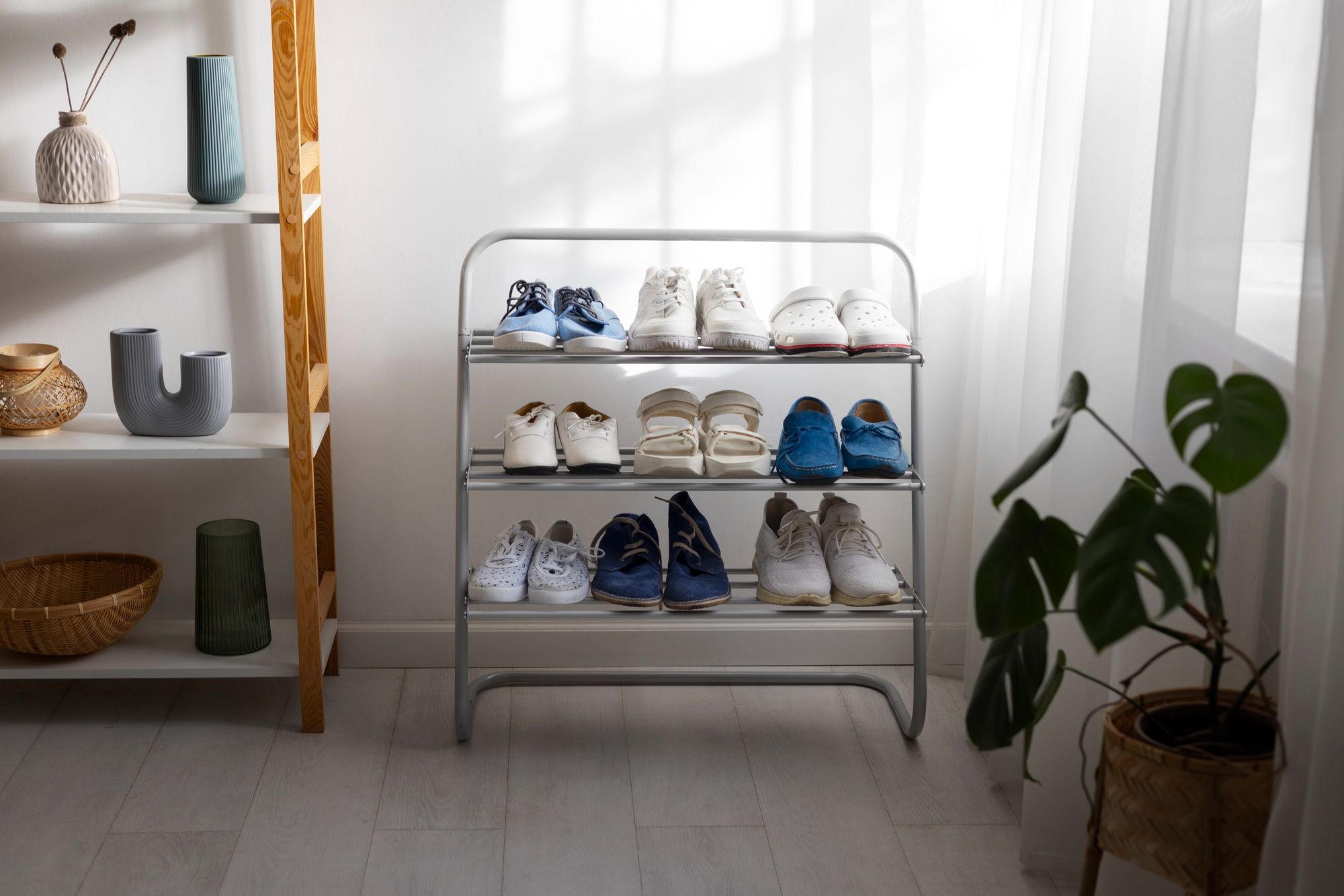
- Low-profile racks for quick access
- Storage benches with hidden compartments
- Wall-mounted shelves to save floor space
- Baskets or bins for casual footwear
A simple rack near the door can help keep things tidy. If space allows, combining seating with storage adds both function and convenience.
Closet Shoe Organization Ideas
Closets offer more flexibility, especially if you can adjust shelving or add systems. Closet shoe organization works best when it’s tailored to your habits.
Consider these ideas:
- Use tiered shelves to maximize vertical space
- Group shoes by type or frequency of use
- Store rarely used pairs in labeled boxes
- Add lighting to improve visibility
Elfa shoe storage systems are especially useful here. Their adjustable shelves make it easy to reorganize as your collection changes.
Boot Storage Solutions
Boots require special attention because of their height and shape. Without proper storage, they can lose structure or become creased.
Here are some practical boot storage solutions:
- Tall shelves dedicated to boots
- Boot shapers to maintain form
- Hanging boot organizers
- Under-bed storage for seasonal pairs
Keeping boots upright is key. This not only preserves their shape but also makes them easier to access when needed.
Comparing Popular Shoe Storage Options
To make decision-making easier, here’s a quick comparison of common shoe storage methods:
| Storage Type | Best For | Space Requirement | Accessibility | Flexibility |
|---|---|---|---|---|
| Open Shoe Rack | Everyday use | Low to medium | High | Medium |
| Closed Cabinet | Clean appearance | Medium | Medium | Low |
| Stackable Boxes | Seasonal storage | Medium | Low | High |
| Hanging Organizer | Small closets | Low | Medium | Medium |
| Modular Systems | Custom layouts | Medium to high | High | High |
This table highlights how different options serve different purposes. The best shoe storage solutions often combine multiple methods for a balanced approach.
Maximizing Small Spaces
Limited space doesn’t mean limited organization. With a few smart adjustments, even compact areas can hold a surprising number of shoes.
Vertical Storage Techniques
Using vertical space is one of the most effective strategies. Instead of spreading shoes across the floor, stack them upward.
Options include:
- Wall-mounted racks
- Over-the-door organizers
- Tall shelving units
These methods free up floor space while keeping everything visible and accessible.
Multi-Functional Furniture
Furniture that serves more than one purpose can make a big difference. For example:
- Benches with hidden compartments
- Ottomans with storage space
- Cabinets that double as décor pieces
These solutions are especially useful in entryways or small apartments.
Decluttering and Rotation
Sometimes, the best solution is simply owning fewer shoes in one place. Rotating seasonal footwear helps reduce overcrowding.
Store off-season shoes separately and bring them out when needed. This keeps your main storage area manageable and organized.
Maintaining Your Shoe Storage System
Once you’ve set up your system, maintaining it is just as important. Organization is not a one-time task—it requires regular upkeep.
Daily Habits
Simple habits can prevent clutter from building up:
- Always return shoes to their designated spot
- Clean shoes before storing them
- Avoid stacking pairs randomly
Consistency is key. Small actions each day help maintain long-term order.
Weekly Check-Ins
Take a few minutes each week to review your setup:
- Reorganize misplaced shoes
- Remove items that don’t belong
- Wipe down shelves or racks
These quick check-ins keep your system functioning smoothly.
Seasonal Adjustments
As seasons change, so do your footwear needs. Adjust your storage accordingly:
- Move seasonal shoes to accessible areas
- Store unused pairs in boxes or bins
- Reevaluate space usage
This ensures your storage system stays relevant throughout the year.
Tips for Better Shoe Organization
Creating an efficient system doesn’t have to be complicated. A few thoughtful strategies can make a big impact.
Keep Visibility in Mind
If you can’t see your shoes, you’re less likely to use them. Clear boxes or open racks improve visibility and make selection easier.
Group Similar Styles
Organizing shoes by type—such as sneakers, formal shoes, or sandals—makes it easier to find what you need quickly.
Use Labels Where Needed
Labels are helpful for boxed or hidden storage. They save time and reduce the need to open multiple containers.
Invest in Adjustable Systems
Flexible systems like elfa shoe storage allow you to adapt as your needs change. This is especially useful if your collection grows over time.
Protect Your Shoes
Proper storage also means protection. Avoid damp areas and ensure good airflow to prevent damage.
Conclusion
An organized shoe storage system can transform your living space. It reduces clutter, saves time, and helps keep your footwear in good condition.
From simple racks to modular systems like elfa shoe rack designs, there are options for every space and lifestyle. The key is to choose a setup that works for your daily routine and maintain it consistently.
Start small if needed. Even a few changes can lead to noticeable improvements. With the right approach, managing your shoes becomes easy and stress-free.