Entryway and Mudroom Organization Guide
A well-organized entryway can make daily life feel smoother from the moment you step inside. Whether you’re dealing with scattered shoes or cluttered corners, a thoughtful setup can transform your space. This guide explores practical ideas to help you create a functional and welcoming mudroom, even in small areas.
Understanding Entryway Mudroom Storage
Entryways and mudrooms serve as transition zones between the outdoors and your home. They collect everything from shoes and bags to jackets and keys. Without proper organization, these areas can quickly become chaotic.
Effective entryway mudroom storage focuses on accessibility and simplicity. The goal is to create a system where everything has a designated place. This reduces clutter and makes daily routines more efficient.
A well-planned mudroom with shoe storage is especially helpful for households with multiple members. It keeps floors clean and ensures that footwear is easy to find when needed.
Why Organization Matters
A tidy mudroom does more than improve appearance. It also:
- Saves time during busy mornings
- Reduces dirt and debris inside the home
- Makes small spaces feel larger
- Creates a more welcoming entry point
Even a compact setup can work well with the right approach.
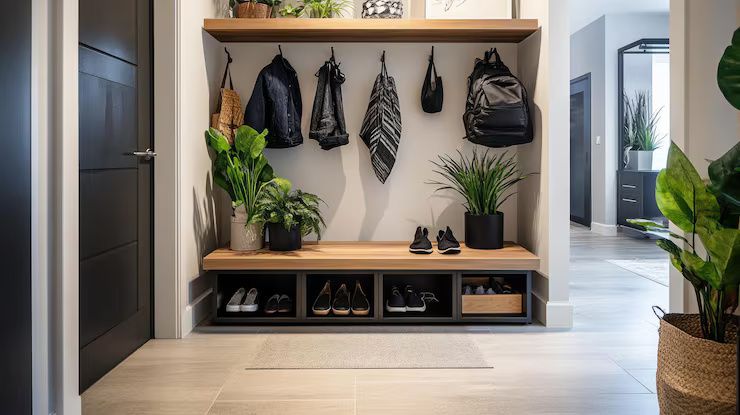
Smart Mudroom Shoe Storage Ideas
Shoes are often the biggest source of clutter in entryways. Finding the right mudroom shoe storage solution can make a noticeable difference.
Open Shelving vs. Closed Storage
Open shelves are ideal for quick access. They allow shoes to air out and are easy to maintain. However, they may look cluttered if not arranged neatly.
Closed cabinets offer a cleaner appearance. They hide mess and can blend seamlessly with your décor. The downside is slightly less convenience.
Vertical Storage Solutions
When floor space is limited, think vertically. Wall-mounted racks or stacked shelves are great for small mudroom shoe storage.
These options help maximize space without making the area feel cramped.
Bench with Storage
A bench with built-in compartments is a practical addition. It provides a place to sit while putting on shoes and doubles as storage.
This is especially useful in a mudroom with shoe storage where comfort and function are both priorities.
Designing a Functional Mudroom Cubby
Mudroom cubby storage is a popular solution for keeping items organized. Each cubby can be assigned to a specific person, making it easier to maintain order.
Individual Storage Zones
Creating individual sections helps reduce clutter. Each person can store their shoes, bags, and outerwear in their designated space.
This approach works well for families and shared living spaces.
Combining Hooks and Shelves
A good mudroom cubby includes:
- Hooks for coats and bags
- Shelves for shoes and accessories
- Baskets or bins for smaller items
This combination ensures that everything has a place without overcrowding the space.
Customizing for Your Needs
Not all homes require the same setup. Some may need more shoe storage, while others may prioritize hanging space.
Adjust your mudroom cubby storage based on your daily habits.
Small Mudroom Storage Solutions
Limited space doesn’t mean limited functionality. With smart planning, even the smallest entryways can be efficient.
Compact Furniture Choices
Choose slim and multi-purpose furniture. Narrow benches, wall-mounted racks, and foldable options are ideal for small mudroom storage.
These pieces help maintain an open and airy feel.
Using Corners Effectively
Corner mudroom storage is often overlooked. Installing corner shelves or angled cabinets can make use of otherwise unused space.
This is a great way to add extra storage without crowding the room.
Minimalist Approach
Keep only essential items in your mudroom. Avoid overloading the space with unnecessary objects.
A minimalist setup makes cleaning easier and keeps the area visually appealing.
Comparing Storage Options
Here’s a simple comparison of common storage solutions to help you decide what works best:
| Storage Type | Best For | Space Requirement | Accessibility | Appearance |
|---|---|---|---|---|
| Open Shelves | Quick access to shoes | Low to Medium | High | Casual |
| Closed Cabinets | Hidden storage | Medium | Medium | Clean |
| Mudroom Cubby | Family organization | Medium to High | High | Structured |
| Bench with Storage | Seating + shoe storage | Medium | High | Balanced |
| Corner Storage Units | Utilizing unused space | Low | Medium | Compact |
This table can guide you in choosing the right combination for your entryway mudroom storage.
Practical Tips for Everyday Organization
Keeping your mudroom organized doesn’t require constant effort. A few simple habits can make a big difference.
Keep It Seasonal
Rotate items based on the season. Store away shoes and gear that aren’t currently in use.
This prevents overcrowding and keeps your mudroom functional.
Use Labels and Bins
Bins and baskets are helpful for grouping smaller items. Labels can make it easier for everyone to find and return things to their place.
This is especially useful in mudroom cubby storage setups.
Clean Regularly
A quick weekly tidy-up can prevent clutter from building up. Remove items that don’t belong and reorganize as needed.
Consistency is key to maintaining an organized space.
Encourage Household Participation
Everyone should take part in keeping the mudroom tidy. Assign responsibilities and make organization a shared habit.
This ensures the system stays effective over time.
Conclusion
An organized entryway or mudroom can simplify your daily routine and create a more welcoming home environment. By choosing the right storage for mud room needs, you can keep clutter under control and make the most of your available space.
Whether you opt for a mudroom with shoe storage, a structured mudroom cubby, or compact solutions for smaller areas, the key is to focus on functionality and ease of use. Start with small changes, and gradually build a system that works for your lifestyle.
With thoughtful planning and consistent upkeep, your entryway can become one of the most efficient and pleasant areas in your home.